

Whislist (0)
Complete Guide to MIL-STD-1553 Communication Bus - ECRIN Systems

Definition of the MIL-STD-1553 communication bus

The MIL-STD-1553 standard communication bus is a redundant digital data bus used by the US military and NATO (North Atlantic Treaty Organisation) in avionics, military and space applications.

Initially intended for weapons systems integration, the MIL-STD-1553 data bus is now found in many military applications such as test simulation, test facilities, control and surveillance centres, or embedded in aircraft, ships, submarines, armoured vehicles, as well as in the International Space Station (ISS) and the James Webb Space Telescope.

This serial data bus is multiplexed, the cable is a shielded twisted pair with a transmission speed of 1 Mbit/s, and an optical variant (MIL-STD-1773 MIL) is also available.
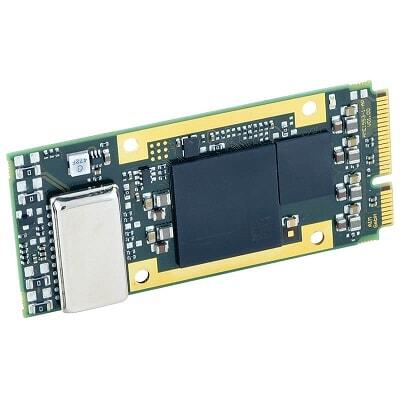
Focus on the MIL-STD-1553 AP570 bus Acromag - ECRIN Systems

Focus on the MIL-STD-1553 AP570 bus

  • Very small form factor at 70mm x 30mm
  • One dual redundant MIL-STD-1553 channel
  • Transformer or direct coupling options
  • IRIG-B input
  • 4 open/ground avionics level (+35V) discrete I/O
  • 2 digital discrete inputs
  • 1 trigger input, 1 trigger output
  • RT address inputs
  • -40°C to +85°C operating temperature

Basic functions and messages

There are three basic functions/nodes, each node being connected to each of the redundant bus:

  • RT Remote Terminal: Simulation of one or more devices (1 to 31).
  • BC Bus Controller: Controller managing the exchanges.
  • BM Bus Monitor: Used to monitor the exchanges.

There are 5 different types of messages, each consisting of one or more 16-bit status, command or data words:

  • Received data
  • Transmitted data
  • Broadcast data
  • Mode code
  • Remote terminals to remote terminals transfer.

The MIL-STD-1553 standard describes the communication method and the electrical interfaces for the subsystems connected to the data bus.

ONYX range: ruggedised calculators that can integrate MIL-STD-1553 modules

Focus on rugged computers that can integrate MIL-STD-1553 modules

  • Intel® Xeon® E-2276ML @ 2.0GHz, 6 cores, 64GB 2400MHz DDR4 ECC memory, cTDP limited to 25W
  • or Intel® Xeon® W-11865MRE @ 2.4GHz, 8 cores, 64GB 2900MHz DDR4 ECC memory.
  • cTDP limited to 25W
  • TPM 2.0
  • MXM expansion slot for demanding application requiring GP-GPU device
  • PMC and mini–PCI Express slots for flexible I/O expansion and Wireless functions
  • Internal 2’’5 SSD slot
  • Cableless, fanless, MIL-DTL-38999 connectors
  • Operating temperature: -40°C to +71°C depending on the processor

How to choose your MIL-STD-1553 card or module?

The choice of MILS-STD-1553 communication card or module will depend on the functions to be supported, the number of buses to be managed, and environmental characteristics.

Below are some criteria to help you make the right choice:

  • Type of application: Test bench, simulation, analysis, control equipment?
  • Field of application: Military avionics, space? Embedded application?
  • Required level of ruggedisation: Temperature range, shock/vibration resistance?
  • Card/module format: VME, Compact PCI, VPX, PMC, XMC, PCI, PCI Express, mini PCIe, AcroPack®?
  • Number of redundant channels or buses to manage: Cards generally offer 1, 2, 4 or 8 channels. Note that a 1553 channel physically corresponds to two buses, A and B (redundant buses).
  • Operating system: Windows, Linux, VxWorks®, other?
  • Need for test analysis software: The offer can be supplemented by the acquisition of an analyser/simulator, a very useful tool during the equipment development phase.
  • Need for a complete system: such as an embedded computer or server with MIL STD 1553 functions?
  • MIL-STD-1553 functions to be supported: RT Remote Terminal, BC Bus Controller, BM Bus Monitor?


Details on MIL-STD-1553 functions to be supported

Multi-function cards support all three functions simultaneously. For example, it is possible to manage a bus (BC mode: bus controller) and simulate equipment (RT mode) at the same time.

Single-function cards support all three functions, but not simultaneously. When configured in RT mode, the card cannot be in BC mode at the same time; however, the application can switch it from RT mode to BC mode.

Dual-function cards support BM+BC or BM+RT modes simultaneously.


Advantages and disadvantages of the MIL-STD-1553 bus

This multiplexed serial data bus has the following advantages:

  • It is well protected against interference.
  • It is deterministic.
  • It allows (via the status word) the receiving equipment to verify that the transfer has been completed successfully.

However, it is sometimes limited by:

  • Its addressing and throughput capabilities.
  • Coupling on the bus (transformer coupling or direct coupling) can also be complicated: many constraints in terms of shielding, insulation resistance, impedance, branch length, transformer ratio, etc.
  • Insufficient shielding can also cause interference with other equipment (high frequency spectrum generated by Manchester encoding).

If you have any questions or require technical details regarding the MIL-STD-1553 communication bus, please contact us using our form.