





Further developing technologies for on-board naval systems
All our news
Guides
Radar and sonar systems require the processing of large volumes of data from sensors, which must then be utilised whilst meeting the end system’s specific constraints regarding throughput, latency, availability and thermal dissipation.
For these applications, ECRIN Systems offers, in particular, µTOPAZE, a ruggedised 3U VPX computer designed for radar, sonar, EWR, C4ISR, AI and signal processing applications. Its design allows for the combination of Intel® CPU, NVIDIA GPU and FPGA resources, depending on the chosen configuration and the programme’s processing requirements.
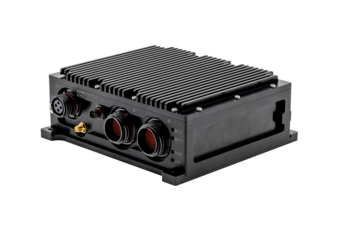
The ONYX range complements this approach for mission computing, C4ISR and electronic warfare functions requiring a compact, fanless computer (conduction cooled) with MIL-DTL-38999 connectivity, expansion options and GPU integration depending on the configuration.
These platforms can therefore be integrated as closely as possible to sensor chains for signal processing, acquisition, radar or sonar data exploitation, graphics processing, supervision or mission computing.
In sonar and acoustic warfare systems, signal processing also relies on the analysis of parameters such as frequency, amplitude, signal level, attenuation and the speed at which acoustic waves propagate through the medium. Data from hydrophones and other acoustic sensors is acquired and conditioned upstream before being processed by digital processing, filtering, detection and acoustic classification functions.
On board submarines and certain surface vessels, these processes contribute to the identification and classification of acoustic signatures. In particular, they provide the information used by acoustic warfare specialists, commonly known as ‘golden ears’.
Audio also plays a role in on-board communications. Depending on the scope of the system, computing platforms may incorporate audio interfaces for the acquisition or playback of audio streams from microphones, headsets or intercom equipment. The functions relating to voice processing, routing and broadcasting then depend on the hardware and software integration chosen for the programme.
Requirements may relate to Command & Control, C4ISR, fire control, situational awareness, supervision or the visualisation of tactical data.
The CRYSTAL-23 naval console is specifically designed for operator stations and CIC environments on surface vessels and submarines. It enables the integration of local or remote computing and graphics processing functions, as well as the display of multiple data sets or streams from on-board systems. Its naval and C2 applications have already been explicitly documented by ECRIN Systems.
The aim is to have an operator workstation that is not viewed in isolation, but as a component of the mission system: networking, computing, visualisation, interfaces and maintainability must be addressed as a whole.
In a Combat Management System (CMS), computers, servers, network equipment and operator workstations form part of a complete chain, ranging from the reception of information from sensors to its presentation to operators.
C4ISR and CMS systems also form part of wider tactical communication chains. Depending on the programme, they can exchange data with equipment dedicated to Tactical Data Links, notably Link 11 or Link 16, in order to share tactical information between ships and other platforms engaged in the operation.
Electronic warfare systems combine signal acquisition, processing, computation, networking and data exploitation in environments where EMC/EMI constraints are critical.
The ONYX and µTOPAZE ranges can be integrated into this type of system when a programme requires CPU, GPU or FPGA resources, additional interfaces or ruggedised embedded computing. ECRIN Systems also caters for C4ISR systems, supervision functions and the processing requirements associated with mission equipment.
This approach also applies to mine warfare systems, for which embedded computing, sensor interfaces, communications and data processing can be integrated onto surface, submarine or autonomous platforms.
=> Read our guide: Embedded systems in electronic warfare applications
Embedded AI is playing an increasingly important role in mission-critical systems where video data or sensor data needs to be analysed locally.
The ONYX-AGX, based on the NVIDIA Jetson AGX Orin Industrial, delivers up to 248 TOPS and combines AI processing with 10 Gb Ethernet, Gigabit Ethernet, CAN, serial, USB and HD-SDI options. It features passive cooling and utilises MIL-DTL-38999 connectors.
For more compact applications, the nanoONYX family offers a choice of variants depending on the required interface: HD-SDI acquisition, CAN, USB 3.0 or removable storage, amongst others. Its low power consumption and compact form factor are particularly advantageous when SWaP-C becomes a critical factor, for example on autonomous platforms or in confined integration spaces.
Optronic chains and periscope systems can generate video streams that need to be acquired, processed, analysed or transmitted to mission functions. In this type of system, the key constraints relate in particular to latency, bandwidth, video interfaces, local processing and integration into a ruggedised environment.
To meet these requirements, ECRIN Systems can integrate dedicated computing modules for on-board video processing. The nanoONYX-SDI features two HD-SDI inputs in a compact, ruggedised form factor for the acquisition and processing of video streams. The ONYX-AGX combines on-board AI processing with, depending on the configuration, up to four HD-SDI inputs for video analysis functions as close as possible to the sensors.
Depending on the operational environment, integration constraints and specific usage context of each project, the OPALE V2, OPALE R and myOPALE RS solutions can also meet the requirements for embedded video and audio processing. This complementarity demonstrates the ECRIN Systems range’s ability to offer architectures suited to different levels of constraints, performance and ruggedisation.
A naval system often comprises several generations of equipment. The challenge therefore lies not only in connecting new computers, but also in enabling existing equipment to communicate with the on-board network.
This gateway function may require Ethernet, fibre optics, serial interfaces, CAN or specific I/O depending on the equipment to be connected.
Integration requirements are not limited to Ethernet, USB or CAN interfaces. Depending on the platform and configuration chosen, specific on-board interfaces can also be integrated, including MIL-STD-1553, ARINC 429, RS-232/422/485 serial interfaces, and digital or analogue I/O. The nanoONYX family, for example, allows these types of interfaces to be added via its AcroPack / mini PCIe expansion modules.
The QUARTZ ruggedised switch enables the creation of a ruggedised network module with eight Gigabit copper Ethernet ports and, depending on the version, two 1 GbE or 10 GbE fibre interfaces. The various versions can incorporate L2/L3 functions, PTP Grandmaster or TSN. The TSN version notably supports IEEE 802.1AS mechanisms, 802.1Qav, 802.1Qbv, 802.1Qci and 802.1CB.
However, synchronisation, flow prioritisation, redundancy and determinism must be defined across the entire network: the choice between a TSN or PTP function depends directly on the timing requirements and the system configuration.
Certain functions require more CPU power, memory, storage or expansion capabilities than a compact computer can provide.
OPALE-Rugged provides a 2U/3U solution based on Intel® Xeon® Scalable processors, featuring configurable MIL-DTL-38999 connectors, IP65 rating, PCIe expansion options and IPMI management. The product is specifically designed, amongst other things, for naval platforms and harsh environments.
The OPALE V2, OPALE V2 Compact and µOPALE V2 ranges also meet requirements for rack-mounted computing, control and command systems, or embedded servers where programme constraints are compatible with their mechanical and environmental specifications.
For AI or HPC requirements necessitating multiple high-performance GPUs, myOPALE-RS can serve as a 2U dual Xeon / dual GPU computing platform, subject to verification that it meets the mechanical, thermal, electrical and environmental constraints of the naval programme in question.
Naval systems are moving towards ever-greater consolidation of computing functions. Virtualisation makes it possible to consolidate multiple software environments and virtual machines onto shared hardware resources, with high requirements in terms of availability, isolation, CPU power, memory, network throughput and disk capacity. This approach is contributing to the emergence of genuine ‘embedded data centres’ within naval platforms.
This consolidation is also accompanied by significant data logging requirements: data from sensors, mission streams, system logs, events or historical records may need to be retained and analysed in accordance with programme requirements.
The CPU, memory, PCIe and storage capacities offered by ECRIN servers provide a hardware foundation to be considered for these consolidation and data logging functions. The choice of hypervisor, software, redundancy and cybersecurity mechanisms remains defined at programme level.
On board, control and supervision functions may require a computing platform capable of centralising data from multiple pieces of equipment, running supervision applications and interfacing with the system’s networks and I/O.
The OPALE V2 range is designed to fulfil centralised data acquisition and control and command functions, with PCIe expansion capabilities and customisable I/O. OPALE V2 Compact and µOPALE V2 can complement this approach where integration constraints require a more compact rack-mountable format, subject to verification of their mechanical, electrical and environmental compatibility with the naval programme.
The choice of platform depends on the function to be performed, the required level of performance, the interfaces, the SWaP-C constraints, the integration environment and the programme’s qualification requirements.
| Naval function / requirement | Primary system requirement | ECRIN solutions |
|---|---|---|
| CIC, Command & Control, fire control, situational awareness | Operator station, mission data visualisation and integration | CRYSTAL-23 |
| Radar, sonar, acoustics, signal processing, on-board acoustics | Signal processing, CPU/GPU/FPGA computing, detection and classification according to the application chain | µTOPAZE |
| C4ISR, electronic warfare, mission computing | Ruggedised computing, CPU/GPU capabilities, onboard extensions and interfaces | ONYX / µTOPAZE depending on configuration |
| Optronics, video and onboard AI | HD-SDI acquisition, video processing and analysis as close as possible to the sensors | nanoONYX-SDI / ONYX-AGX |
| Embedded Ethernet networking and synchronisation |
Copper/fibre Ethernet, 1/10 GbE, PTP or TSN depending on version |
QUARTZ |
| Control, supervision and centralised data acquisition | Rack-mountable computing, PCIe expansion slots and customisable I/O | OPALE V2 / OPALE V2 Compact / µOPALE V2 |
| Virtualisation, consolidation and recording |
CPU/memory resources, disk capacity, extensions and system administration |
OPALE-Rugged / myOPALE-RS, depending on software configuration and programme requirements |
| Ruggedised server and high-performance computing | Xeon processing, PCIe expansion slots or GPU acceleration as required | OPALE-Rugged / myOPALE-RS, depending on programme requirements |
Naval programmes rarely require an entirely standard configuration.
The ECRIN ranges can serve as a COTS basis and then be adapted using a Modified COTS approach: hardware configuration, expansion cards, interfaces, connectors, front panel, cabling, mechanical components, power supply, cooling or software functions, depending on the product in question.
This approach allows us to maintain a controlled product base whilst precisely meeting the system’s specifications.
The design office brings together the necessary expertise in mechanical engineering, electronics, cabling, industrialisation, qualification and documentation. The teams are involved from the analysis of the specifications right through to qualification, integration, production and product support.
Naval equipment cannot be generically described as ‘naval-certified’. Requirements must be defined on the basis of the platform, its location, the equipment’s actual operating environment and the contractual specifications.
STANAG 1008, for example, is a standard directly linked to the characteristics of power supplies on board NATO naval vessels. MIL-STD-167-1 specifically concerns the vibration of equipment installed on board ships.
Depending on the scope of the programme, other standards specifically relating to on-board equipment may also be included in the specifications:
Their applicability must be defined on a programme-by-programme basis. NB: Their mention here does not constitute a declaration of conformity of all ECRIN products with these standards.
Other standards commonly encountered in ECRIN systems have a broader scope:
DO-160 remains an aerospace standard, whilst MIL-STD-1275E relates to the electrical characteristics of military land vehicles: their inclusion in certain ECRIN equipment attests to the qualifications of these products, but should not be equated with a generic naval qualification.
A naval system is designed to remain in service for many years. Initial performance is therefore not enough: maintainability, configuration management, obsolescence and the availability of replacement parts must be taken into account right from the system’s design stage.
ECRIN Systems supports programmes in the areas of operational maintenance (MCO), obsolescence management, configuration changes and long-term support.
Maintainability can also be mechanically integrated into the product: access to replaceable components, removable discs, suitable connectors, LRU-type sub-assemblies and the specification of spare parts enabling the customer to organise their own support.
Support may include product documentation, qualification plans, supporting documentation, maintenance plans and Integrated Logistical Support (ILS) elements, depending on the scope of the programme.
ECRIN Systems does not merely integrate off-the-shelf components.
Design, integration, production, testing and unit validation are carried out at the Crolles site, with the technical and quality teams involved throughout the project.
This in-house expertise enables prime contractors, equipment manufacturers and integrators to work with a French and European industrial partner capable of supporting a programme from the initial specifications right through to maintenance, repair and overhaul (MRO).
With 50 years of innovation in the field of embedded and mission-critical systems, ECRIN Systems draws on its long-standing experience to support programmes requiring customisation, configuration control, sustainability and long-term support.
Temperature, humidity, salt spray, shock and vibration
Environmental constraints vary significantly depending on whether equipment is installed in a protected rack, an equipment room, a CIC, on deck, in a submarine or on a stand-alone platform.
Temperature, humidity, salt spray, dust, water spray, shocks and vibrations must be assessed in relation to the system’s actual location. IP65 or IP67 ratings and environmental qualifications are therefore selected on a product-by-product basis, in accordance with the specifications.
Managing EMC and the power supply for on-board systems
Computer units, communications equipment, radars, electronic warfare systems and power supplies coexist in a dense electromagnetic environment.
Control of EMC/EMI emissions and immunity must be planned from the product definition stage. MIL-STD-461, NATO E3 requirements or power supply constraints defined by the programme may thus influence filtering, connectors, cabling and power supply.
For NATO warships, STANAG 1008 may, in particular, be relevant to the specification of the ship’s electrical network.
Adapting the design to the space actually available
A 19-inch server, a compact computer or a 3U VPX system are subject to different constraints. On a stand-alone platform or a naval drone, mass, volume and power consumption can be decisive factors. On a surface vessel or a submarine, the constraints may relate more to rack integration, access for maintenance, available depth or thermal dissipation.
The choice must therefore strike a balance between CPU/GPU/FPGA performance, interfaces, cooling, mass, power consumption and scalability.
Dissipating heat without compromising the mission environment
Cooling may be based on a fanless design, thermal conduction, forced ventilation or, for certain developments, other solutions specified by the programme.
A ‘fanless’ design is not automatically the best solution: the choice must be made based on the heat to be dissipated and the actual environment.
Acoustic signature can also be a significant constraint on board, particularly in systems where the noise level of a piece of equipment may interfere with the platform’s acoustic objectives or sonar systems.
Connecting sensors, control units and on-board equipment
Copper or fibre-optic Ethernet, serial interfaces, CAN, specific I/O and MIL-DTL-38999 connectors can be combined depending on the system.
Networks may also require synchronisation, redundancy, prioritisation or determinism functions.
QUARTZ, for example, can meet various requirements for Gigabit/10 Gigabit Ethernet, PTP or TSN depending on the version, whilst ECRIN control units offer interface customisation options depending on the product range.
Minimising the system’s attack surface
Cybersecurity must not be added after the control unit has been installed.
Selecting only the interfaces that are genuinely required, removing or disabling unused ports, protecting connectors and utilising features such as TPM or Trusted Boot on platforms that support them can all be integrated right from the system design stage.
Certain versions of QUARTZ also include secure networking features such as access control, MACsec, firewall or VPN, depending on the variant chosen.
Reducing on-board service time
Access to replaceable components, hard drives, fans, circuit boards and interfaces must be taken into account right from the mechanical design stage. An approach based on LRUs (Line Replaceable Units), combined with a spare parts strategy and maintenance documentation, can enable the customer to carry out certain operations directly on site whilst retaining control over the configuration.
Maintaining the configuration throughout the programme’s lifetime
The lifespan of a naval programme is far longer than the commercial lifecycle of a processor, a GPU or an electronic board. Obsolescence management, revision control, planning for replacements and managing the impacts of hardware upgrades are therefore essential. The aim is to preserve the system’s configuration, its qualification and its maintainability for as long as the programme requires.
Designed to withstand temperature, humidity, salt spray, shock, vibration and electromagnetic interference.
Reduction of the exhibition area, protection of access points and integration of security features in accordance with the programme’s requirements.
Ethernet, fibre, serial interfaces, CAN, MIL-DTL-38999 connectors and synchronisation in accordance with the requirements of on-board equipment.
Configuration management, obsolescence management, maintainability and long-term support to support the life cycle of naval programmes.
Multidisciplinary engineering consultancy. Mechanics, electronics, cabling, industrialisation, qualification, documentation, compliance with specifications.
COTS, Modified COTS and qualification. Adaptation of interfaces and connectors, specific configurations, qualification and project quality.
Design, integration and production in France. Integration at the Crolles site, testing and unit validation.
Life cycle, O&M and technical support. Configuration management, obsolescence, maintainability, SLI and technical support, particularly for Linux.
Radar, sonar, CMS, C4ISR, electronic warfare, embedded AI, operator stations, on-board networks or mission servers: each project demands its own specific combination of computing power, interfaces, connectivity, environment, cooling, SWaP-C, qualification and maintenance requirements.
Tell us about your system requirements, your environmental and regulatory constraints, and the interfaces to be integrated.
Our technical teams can get involved right from the specification analysis stage to identify the most suitable COTS or Modified COTS platform, and to prepare for its integration, qualification and maintenance in operational condition.
Let’s discuss your next naval programme together.


